Post
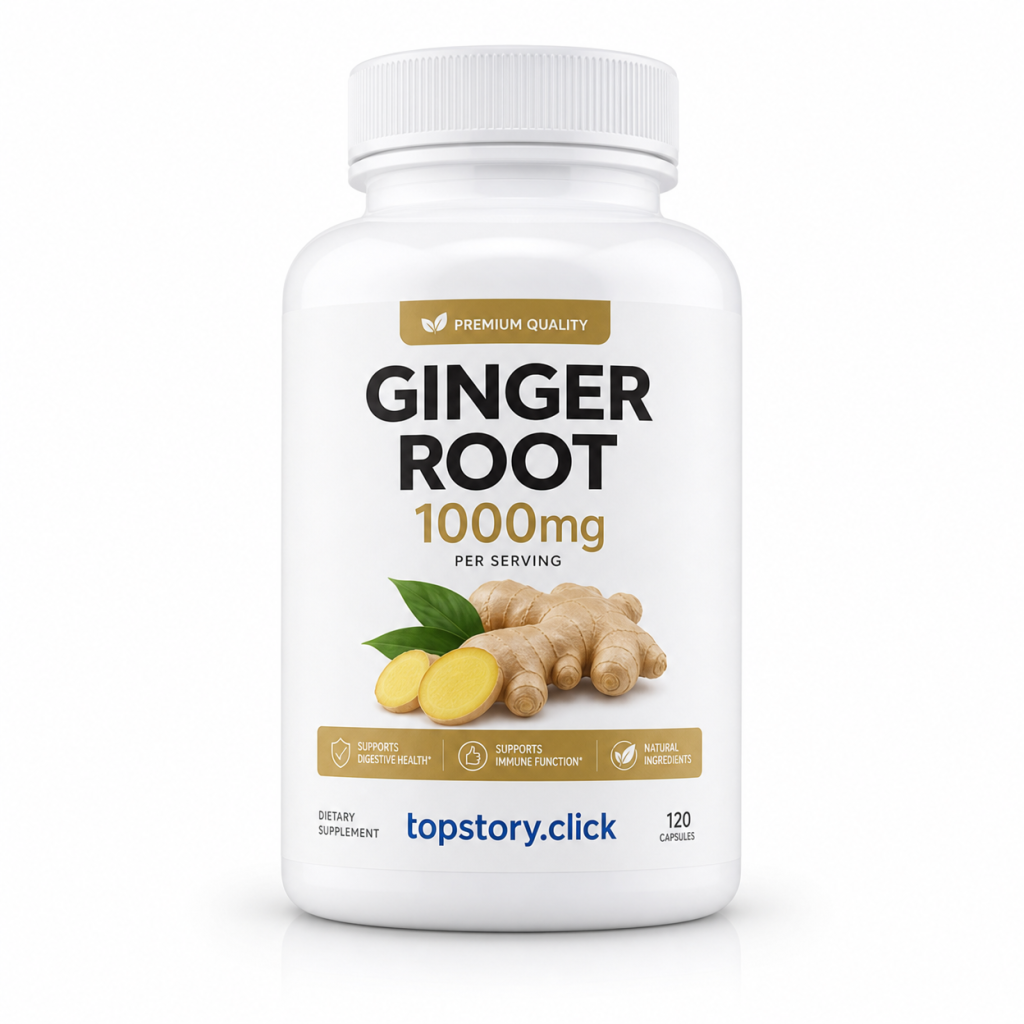
Ginger Root 1000mg: Digestive Relief, Anti-Inflammation, and Vitality
May
Introduction
Ginger (Zingiber officinale) is among the oldest and most widely used medicinal plants in human history. Originating in Southeast Asia and cultivated for over 2,500 years, it has played a central role in traditional Chinese medicine, Ayurveda, and Japanese Kampo medicine. Historically valued for treating digestive disorders, nausea, infections, and inflammatory conditions, ginger is now firmly established in modern pharmacological research as a multi-target bioactive herb.
Ginger Root 1000mg supplements provide a concentrated and standardized dose of its key active compounds, allowing consistent therapeutic intake beyond what is typically achieved through dietary use alone.
Bioactive Chemistry and Mechanisms of Action
The medicinal properties of ginger are primarily attributed to a group of phenolic compounds and volatile oils, including:
- Gingerols (especially 6-gingerol) — predominant in fresh ginger
- Shogaols — formed during drying or heat processing, more potent anti-inflammatory agents
- Paradols — structurally related compounds with analgesic properties
- Zingerone — contributes to antioxidant and gastrointestinal effects
These compounds act through multiple physiological pathways, including:
- Inhibition of cyclooxygenase (COX-1 and COX-2)
- Suppression of lipoxygenase (5-LOX) pathways
- Modulation of serotonin (5-HT3) receptors in the gastrointestinal tract
- Regulation of inflammatory transcription factors such as NF-κB
- Enhancement of antioxidant defense systems
This multi-target pharmacology explains ginger’s unusually broad therapeutic profile compared to many single-pathway drugs.
Gastrointestinal and Digestive Health
Anti-Nausea Mechanisms
One of ginger’s most well-established clinical applications is the reduction of nausea across multiple conditions:
- Pregnancy-related nausea (morning sickness)
- Chemotherapy-induced nausea
- Post-operative nausea
- Motion sickness
The primary mechanism involves antagonism of 5-HT3 serotonin receptors in both the gut and central nervous system. These receptors are strongly involved in nausea signaling. Ginger also accelerates gastric emptying, reducing stomach distension — another major contributor to nausea sensations.
Clinical trials consistently show that doses around 1000–1500mg per day significantly reduce nausea severity without the sedation or neurological side effects associated with pharmaceutical antiemetics.
Digestive Function and Motility
Beyond nausea control, ginger acts as a broad gastrointestinal modulator:
- Increases gastric enzyme secretion
- Enhances bile flow and fat digestion
- Improves intestinal motility
- Reduces gas formation and bloating
- Relieves functional dyspepsia symptoms
These effects make ginger particularly useful for individuals with sluggish digestion or post-meal discomfort.
Anti-Inflammatory and Pain-Relieving Effects
Ginger is one of the few natural compounds with clinically validated analgesic properties comparable to non-steroidal anti-inflammatory drugs (NSAIDs) in certain conditions.
Osteoarthritis and Joint Pain
Clinical studies show that ginger supplementation reduces pain and improves physical function in individuals with knee osteoarthritis. Mechanistically, ginger inhibits both COX and LOX pathways, reducing the production of inflammatory prostaglandins and leukotrienes that drive joint inflammation.
Unlike NSAIDs, ginger does not significantly increase gastrointestinal bleeding risk when used at standard doses.
Muscle Pain and Exercise Recovery
Research on delayed-onset muscle soreness (DOMS) shows that daily ginger intake can reduce exercise-induced pain by approximately 20–25%. This effect is attributed to reduced inflammatory signaling and oxidative stress following muscle microtrauma.
Menstrual Pain (Dysmenorrhea)
Ginger has demonstrated strong efficacy in reducing menstrual cramps. Several randomized controlled trials show that 1500mg of ginger per day during the first days of menstruation is as effective as standard doses of ibuprofen for pain relief.
This makes ginger a valuable non-pharmaceutical option for women seeking natural management of cyclic pain.
Metabolic and Blood Sugar Regulation
Ginger influences glucose metabolism through several complementary mechanisms:
- Increased GLUT-4 transporter activity (enhanced glucose uptake into cells)
- Reduced insulin resistance (lower HOMA-IR scores in clinical studies)
- Inhibition of inflammatory cytokines that impair insulin signaling
- Improved pancreatic beta-cell function in experimental models
Meta-analyses of randomized trials demonstrate reductions in:
- Fasting blood glucose
- HbA1c (long-term glucose marker)
- Fasting insulin levels
These effects are particularly relevant in type 2 diabetes and metabolic syndrome.
Cardiovascular Health
Ginger contributes to cardiovascular protection through multiple mechanisms:
Lipid Regulation
- Reduces LDL cholesterol
- Lowers triglycerides
- Reduces lipid peroxidation (LDL oxidation)
Circulatory Effects
- Mild blood pressure reduction
- Improved endothelial function
- Reduced platelet aggregation (antithrombotic effect)
By improving both lipid profiles and vascular function, ginger supports overall cardiovascular resilience.
Antimicrobial and Immune Activity
Ginger exhibits broad antimicrobial properties against bacteria, viruses, and fungi.
Antiviral Effects
Studies suggest activity against respiratory viruses such as:
- Rhinoviruses (common cold)
- Respiratory syncytial virus (RSV)
Antibacterial Effects
Ginger compounds show inhibitory effects against:
- Helicobacter pylori (gastric ulcer-associated bacteria)
- Various foodborne pathogens
- Oral bacteria linked to periodontal disease
These effects are largely due to membrane disruption and interference with microbial energy metabolism.
Antioxidant and Anti-Cancer Potential
Ginger’s antioxidant capacity is mediated through both direct radical scavenging and upregulation of endogenous antioxidant enzymes such as:
- Glutathione peroxidase
- Superoxide dismutase
- Catalase
Cancer Research
Preclinical studies demonstrate that ginger compounds, particularly 6-gingerol and 6-shogaol, can:
- Induce apoptosis (programmed cancer cell death)
- Inhibit tumor cell proliferation
- Suppress angiogenesis (blood supply to tumors)
- Reduce metastatic potential in cell and animal models
While human clinical trials are still limited, epidemiological and laboratory data suggest promising chemopreventive potential.
Metabolic and Systemic Effects
Ginger also influences systemic physiology beyond isolated organ systems:
- Modulates inflammatory gene expression (NF-κB pathway inhibition)
- Reduces oxidative stress markers in blood
- Improves lipid-glucose interaction in metabolic syndrome
- Supports thermogenesis and mild metabolic activation
These combined effects contribute to ginger’s reputation as a “whole-body regulator” rather than a single-target herb.
Dosage and Safety Profile
A 1000mg daily dose of ginger root extract is within the clinically studied therapeutic range. Most human trials use between 1–2g per day.
Safety Considerations
Ginger is generally classified as GRAS (Generally Recognized As Safe). However:
- High doses may cause mild heartburn or gastric irritation in sensitive individuals
- It has mild antiplatelet effects, so caution is advised with anticoagulant medications
- Pre-surgical discontinuation is sometimes recommended due to potential bleeding risk
Overall, toxicity is extremely low, and long-term use is considered safe for most individuals.
Conclusion
Ginger Root 1000mg represents one of the most versatile and clinically supported herbal supplements available today. Its ability to influence gastrointestinal function, inflammation, pain perception, metabolic health, cardiovascular function, and immune defense through multiple complementary mechanisms makes it uniquely broad in therapeutic scope.
Supported by both centuries of traditional use and a strong foundation of modern clinical research, ginger remains a cornerstone botanical for digestive health, inflammatory balance, and overall systemic wellness.
