Post
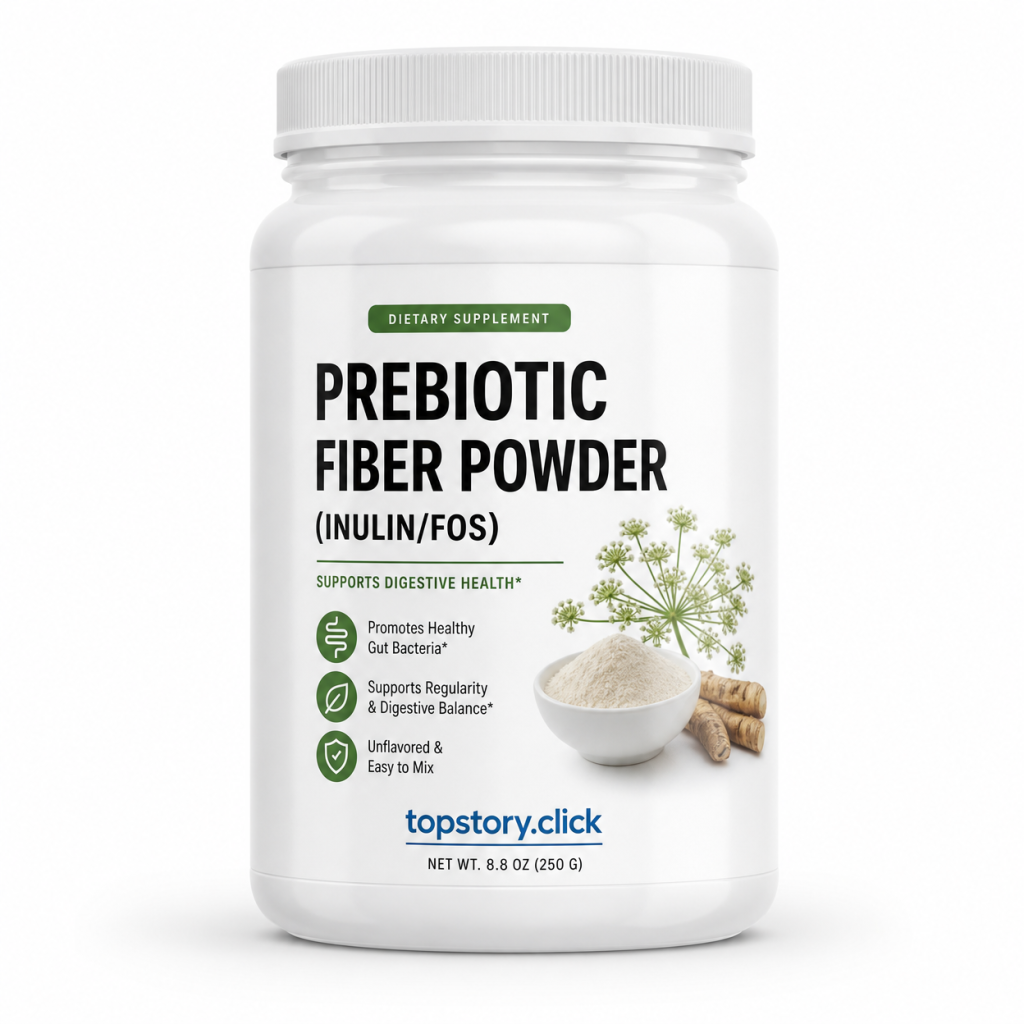
Prebiotic Fiber Powder (Inulin/FOS): Nourish Your Gut Microbiome from the Ground Up
May
Introduction
While probiotics introduce beneficial live microorganisms into the gastrointestinal tract, prebiotics operate at a more foundational level: they provide the selective nutritional substrate required for those microorganisms — as well as the resident gut microbiota — to grow, metabolize, and maintain a stable ecological balance. Without adequate prebiotic intake, even the most potent probiotic supplementation may have limited long-term impact, as introduced bacteria struggle to persist in an environment lacking sufficient fermentable substrates.
Prebiotic fiber powders containing inulin and fructooligosaccharides (FOS) represent one of the most extensively researched and clinically validated approaches to microbiome modulation. Unlike general dietary fiber, prebiotics exert targeted biological effects on specific bacterial populations, particularly Bifidobacterium and Lactobacillus species. This targeted fermentation leads to downstream metabolic changes that influence gut integrity, immune regulation, metabolic function, and even neurochemical balance.
What Are Prebiotics?
Prebiotics are defined as non-digestible food components that are selectively utilized by host microorganisms, conferring a health benefit. The key distinction lies in selectivity: not all fibers are prebiotics, but all prebiotics are fibers with a specific functional role in microbial ecology.
To qualify as a true prebiotic, a compound must:
- Resist digestion in the upper gastrointestinal tract
- Reach the colon intact
- Be fermented by beneficial microbial species
- Preferentially stimulate health-promoting bacteria over pathogenic or opportunistic strains
Inulin and fructooligosaccharides meet all of these criteria. They are not broken down by human digestive enzymes and instead pass into the colon, where they serve as a primary energy source for saccharolytic bacteria. These bacteria possess specialized enzymes capable of hydrolyzing fructan chains, enabling them to metabolize inulin and FOS into short-chain fatty acids (SCFAs) and other bioactive metabolites.
Structural Biology of Inulin and FOS
Both inulin and fructooligosaccharides belong to a class of carbohydrates known as fructans — polymers composed primarily of fructose units linked by β-(2→1) glycosidic bonds, with a terminal glucose molecule.
Despite their structural similarity, they differ significantly in chain length and fermentation kinetics:
- Fructooligosaccharides (FOS): Short-chain fructans (typically 2–8 units) that are rapidly fermented in the proximal colon.
- Inulin: Longer-chain fructans (10–60+ units) that ferment more slowly and extend microbial activity into the distal colon.
This dual fermentation profile is clinically significant. FOS provides rapid substrate availability, while inulin ensures sustained fermentation throughout the colon. Together, they create a more uniform distribution of microbial activity, supporting biodiversity across different regions of the large intestine.
Mechanisms of Action in the Gut Ecosystem
Selective Microbial Stimulation
One of the most well-documented effects of inulin and FOS is the selective proliferation of Bifidobacterium species. Within days to weeks of supplementation, fecal microbiota analyses consistently demonstrate significant increases in bifidobacterial populations.
This shift is important because Bifidobacterium species:
- Produce lactic acid and acetic acid, lowering intestinal pH
- Suppress growth of pathogenic bacteria
- Enhance immune signaling via gut-associated lymphoid tissue (GALT)
- Contribute to maintenance of intestinal barrier integrity
Short-Chain Fatty Acid (SCFA) Production
The fermentation of inulin and FOS yields three primary SCFAs:
- Butyrate: Primary energy source for colonocytes
- Propionate: Modulates hepatic gluconeogenesis and lipid metabolism
- Acetate: Systemic energy substrate involved in cholesterol and appetite regulation
Butyrate is particularly critical. It serves as the preferred fuel for colon epithelial cells and plays a central role in maintaining mucosal integrity. It also acts as a histone deacetylase (HDAC) inhibitor, influencing gene expression patterns related to inflammation, cellular differentiation, and apoptosis.
Key Health Benefits of Inulin and FOS Supplementation
Gut Barrier Integrity and “Leaky Gut” Reduction
A healthy intestinal barrier is essential for preventing translocation of bacterial endotoxins such as lipopolysaccharides (LPS) into systemic circulation. Elevated LPS levels are associated with chronic low-grade inflammation, insulin resistance, cardiovascular disease, and neuroinflammatory conditions.
SCFAs produced from prebiotic fermentation strengthen tight junction proteins (including occludin and claudins), reducing intestinal permeability and reinforcing barrier function. This has systemic implications beyond the gut itself.
Immune System Modulation
Approximately 70% of immune activity is associated with the gastrointestinal tract. Prebiotic fibers influence immune function indirectly through microbial metabolites and directly through modulation of gut-associated immune cells.
Increased Bifidobacterium populations and SCFA production enhance:
- Regulatory T-cell activity (reducing excessive inflammation)
- Secretory IgA production (first-line mucosal defense)
- Balanced cytokine expression (IL-10 vs. pro-inflammatory cytokines)
This results in improved immune resilience and reduced susceptibility to infections and inflammatory conditions.
Metabolic and Glycemic Regulation
Inulin and FOS influence metabolic health through multiple pathways:
- Slowing gastric emptying, reducing postprandial glucose spikes
- Enhancing GLP-1 and PYY secretion (satiety and insulin modulation hormones)
- Improving insulin sensitivity via SCFA-mediated signaling pathways
- Modulating hepatic lipid metabolism through propionate activity
Clinical studies consistently demonstrate improvements in fasting glucose, insulin sensitivity, and HbA1c, particularly in individuals with metabolic syndrome or prediabetes.
Mineral Absorption and Bone Health
One of the most clinically underappreciated benefits of prebiotic fiber is its ability to enhance mineral absorption, particularly calcium and magnesium.
This occurs through:
- Acidification of the colonic environment via SCFAs
- Increased solubility of minerals
- Upregulation of calcium transport mechanisms in the colon
Studies suggest calcium absorption can increase by 20–50%, making prebiotics particularly relevant for adolescents (peak bone mass development) and postmenopausal women (bone density preservation).
Weight Management and Appetite Regulation
Prebiotics influence appetite and energy balance through gut-brain axis signaling. SCFAs stimulate satiety hormones such as GLP-1 and PYY while suppressing ghrelin (the hunger hormone).
This hormonal modulation contributes to:
- Reduced caloric intake
- Improved satiety after meals
- Decreased visceral fat accumulation over time
Although not a direct weight-loss agent, inulin/FOS supports metabolic conditions that favor healthy body composition.
Gastrointestinal Motility and Constipation Relief
Unlike stimulant laxatives, prebiotics improve bowel regularity through physiological mechanisms. Fermentation increases osmotic water retention in the colon and stimulates peristalsis via gas production and SCFA signaling.
The result is:
- Softer stool consistency
- Increased stool frequency
- Improved gut transit time
Importantly, this effect is gentle and does not induce dependency.
Lipid Metabolism and Cholesterol Regulation
Prebiotic fibers reduce serum cholesterol through several mechanisms:
- Inhibition of hepatic cholesterol synthesis
- Increased bile acid excretion
- Alteration of gut microbial bile acid metabolism
Meta-analyses demonstrate modest but consistent reductions in LDL cholesterol and total cholesterol with regular intake.
Synbiotic Synergy: Prebiotics + Probiotics
The combination of prebiotics and probiotics forms a synbiotic strategy, which is increasingly recognized as more effective than either approach alone.
Prebiotics:
- Provide metabolic fuel for probiotic organisms
- Enhance colonization efficiency
- Extend survival of introduced bacterial strains
- Promote long-term microbial stability
This synergy is particularly relevant in individuals with dysbiosis or after antibiotic use, where microbial ecosystems require both reintroduction and nutritional support.
Dosing, Adaptation, and Tolerability
Clinical studies typically use doses ranging from 5g to 20g daily. However, gastrointestinal adaptation is essential.
Initial supplementation may produce:
- Gas and bloating
- Increased bowel activity
- Temporary digestive discomfort
These effects reflect microbial fermentation activity rather than intolerance. Gradual titration — starting at 2–5g daily and increasing over 2–4 weeks — significantly improves tolerability and long-term adherence.
Safety and Considerations
Inulin and FOS are generally safe and well tolerated in healthy individuals. However, caution may be required in:
- Individuals with irritable bowel syndrome (IBS), particularly FODMAP sensitivity
- Small intestinal bacterial overgrowth (SIBO), where excessive fermentation in the small intestine may exacerbate symptoms
- Severe gastrointestinal disorders requiring clinical supervision
For most users, side effects are mild and transient.
Conclusion
Prebiotic Fiber Powder (Inulin/FOS) represents a foundational intervention in gut health, targeting the microbiome not through microbial replacement but through ecological nourishment. By selectively feeding beneficial bacterial populations and driving the production of short-chain fatty acids, prebiotics influence intestinal integrity, immune regulation, metabolic balance, and systemic inflammation at a fundamental biological level.
Rather than acting as a symptomatic treatment, prebiotics function as an ecosystem modulator — reshaping the internal microbial environment in a way that supports long-term resilience and whole-body health. In any comprehensive approach to nutrition or supplementation, they serve as a structural pillar upon which probiotic interventions and dietary strategies can build.
