Post
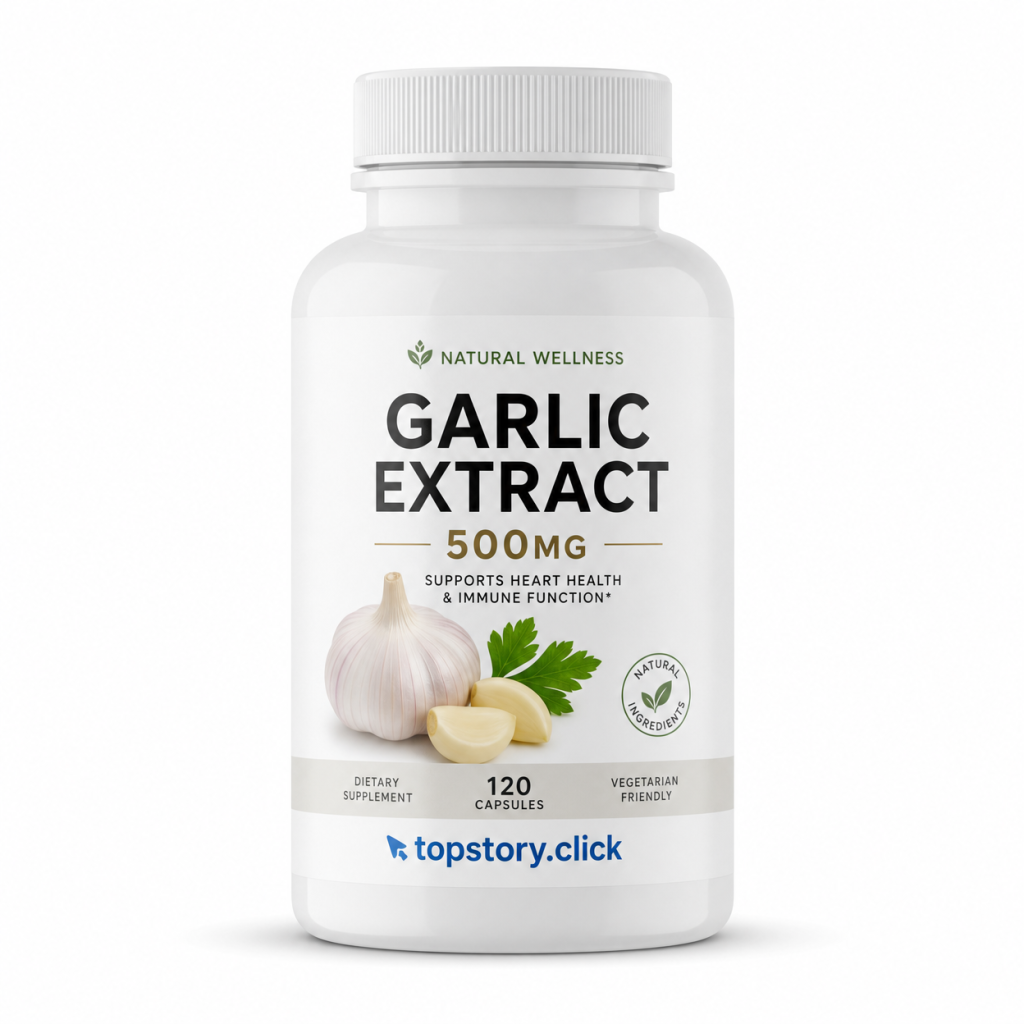
Garlic Extract 500mg: Heart Health, Immunity, and Antimicrobial Power
May
Introduction
Garlic (Allium sativum) is one of the most extensively researched medicinal foods in both traditional and modern medicine. For more than 5,000 years, it has been used across ancient Egyptian, Greek, Roman, Chinese, and Indian healing systems as a remedy for cardiovascular weakness, infections, digestive disorders, and general fatigue. What was once empirical traditional knowledge is now strongly supported by modern biochemical and clinical research.
Contemporary science has identified garlic as a rich source of organosulfur compounds with potent pharmacological activity, most notably allicin and its downstream metabolites. Standardized garlic extract at 500mg provides a concentrated and consistent dose of these bioactive compounds, making it a practical therapeutic option for cardiovascular, immune, metabolic, and antimicrobial support.
Bioactive Compounds and How Garlic Works
The medicinal activity of garlic is primarily driven by a chemical transformation that occurs when the raw clove is crushed or chopped. In intact garlic, the compound alliin remains inactive. Once tissue damage occurs, the enzyme alliinase converts alliin into allicin — a highly reactive sulfur compound responsible for garlic’s pungent aroma and most of its biological effects.
Allicin is unstable and rapidly breaks down into a series of secondary compounds, including:
- Diallyl disulfide (DADS)
- Diallyl trisulfide (DATS)
- Ajoene
- S-allylcysteine (SAC)
Each of these compounds contributes to different physiological effects, particularly in vascular function, oxidative stress regulation, and immune modulation.
A key mechanism shared by many of these compounds is the modulation of hydrogen sulfide (H₂S) signaling. H₂S is now recognized as a gaseous signaling molecule (similar to nitric oxide) that plays a major role in vasodilation, cellular protection, and anti-inflammatory pathways.
Cardiovascular System Support
Blood Pressure Regulation
One of the most well-established benefits of garlic is its ability to reduce blood pressure. Clinical meta-analyses consistently show meaningful reductions in both systolic and diastolic blood pressure in individuals with hypertension.
Mechanistically, garlic sulfur compounds increase the production of hydrogen sulfide and nitric oxide, both of which relax smooth muscle cells in blood vessel walls. This leads to vasodilation, reduced peripheral resistance, and improved arterial flexibility.
In practical terms, even modest reductions of 4–7 mmHg in systolic blood pressure are associated with significant reductions in long-term cardiovascular risk, including stroke and myocardial infarction.
Cholesterol and Lipid Metabolism
Garlic also influences lipid metabolism by reducing hepatic cholesterol synthesis. It appears to inhibit HMG-CoA reductase — the same enzyme targeted by statin medications, though to a much milder degree.
Clinical studies show that consistent supplementation may:
- Reduce LDL cholesterol
- Lower total cholesterol
- Slightly reduce triglycerides
- Maintain or improve HDL levels
These effects are most pronounced in individuals with elevated baseline cholesterol rather than those with normal lipid levels.
Antiplatelet and Circulatory Effects
Garlic inhibits platelet aggregation, meaning it reduces the tendency of blood to clot excessively. This contributes to improved circulation and may reduce the risk of thrombotic events such as heart attacks and ischemic strokes.
This antithrombotic property is one reason garlic is often considered a “blood-thinning” functional food, although its effect is significantly milder than pharmaceutical anticoagulants.
Antimicrobial and Immune Defense Activity
Garlic is one of the most broad-spectrum natural antimicrobials known.
Antibacterial Effects
Allicin reacts with thiol groups in bacterial enzymes, disrupting essential metabolic processes. This makes it effective against both Gram-positive and Gram-negative bacteria, including resistant strains such as MRSA in laboratory conditions.
Antiviral Activity
Garlic compounds interfere with viral replication and attachment mechanisms. While not a substitute for antiviral medications, garlic supplementation has been associated with reduced incidence and duration of common viral respiratory infections.
Antifungal and Antiparasitic Effects
Garlic also demonstrates activity against Candida species and certain intestinal parasites. This is partly due to its ability to disrupt microbial cell membranes and interfere with energy metabolism.
Immune System Modulation
Beyond direct antimicrobial action, garlic enhances immune function by supporting both innate and adaptive immunity.
Key effects include:
- Increased activity of macrophages and natural killer cells
- Enhanced lymphocyte proliferation
- Improved cytokine signaling balance
- Reduced excessive inflammatory responses
Clinical trials have shown that regular garlic supplementation may reduce the frequency of upper respiratory infections and shorten their duration when they occur.
Antioxidant and Anti-Inflammatory Properties
Garlic exerts strong antioxidant effects by increasing endogenous antioxidant enzymes such as:
- Glutathione peroxidase
- Superoxide dismutase (SOD)
- Catalase
At the same time, it reduces oxidative stress markers by neutralizing reactive oxygen species and supporting glutathione metabolism.
Its anti-inflammatory effects are mediated through suppression of NF-κB signaling, a central pathway involved in chronic inflammation. This makes garlic relevant not only for acute infections but also for long-term conditions such as cardiovascular disease, metabolic syndrome, and neurodegeneration.
Metabolic Health and Blood Sugar Regulation
Garlic has demonstrated benefits in glucose metabolism and insulin sensitivity. Clinical studies in type 2 diabetes populations show:
- Lower fasting blood glucose
- Reduced HbA1c levels
- Improved insulin sensitivity markers
These effects are likely driven by improved pancreatic beta-cell function, reduced oxidative stress, and enhanced glucose uptake in peripheral tissues.
While not a replacement for diabetes medication, garlic can serve as a supportive metabolic adjunct.
Cancer Research and Chemopreventive Potential
Garlic is one of the most studied dietary agents in cancer prevention research. Epidemiological studies consistently show inverse associations between garlic intake and cancers of the:
- Stomach
- Colon
- Esophagus
- Pancreas
- Breast
Mechanistically, garlic compounds may:
- Induce apoptosis (programmed cancer cell death)
- Inhibit tumor angiogenesis
- Block carcinogen activation
- Enhance DNA repair mechanisms
Although human clinical trials are still limited, the consistency of laboratory and population data makes garlic one of the more promising dietary chemopreventive agents.
Detoxification and Heavy Metal Protection
Sulfur-containing compounds in garlic, particularly S-allylcysteine, bind to heavy metals such as lead, cadmium, and mercury. This chelating effect facilitates their excretion from the body.
Some occupational studies have shown that garlic supplementation can reduce lead levels in exposed individuals, sometimes performing comparably to pharmaceutical chelating agents but with fewer side effects.
Additionally, garlic enhances phase II liver detoxification pathways, supporting the elimination of endogenous and environmental toxins.
Digestive and Gut Health
Garlic influences the gut microbiome by selectively inhibiting harmful bacteria while supporting beneficial microbial populations. It may also help suppress Helicobacter pylori, a bacterium associated with gastritis and peptic ulcers.
However, in sensitive individuals, garlic can also cause gastrointestinal irritation due to its potency and fermentable sulfur content.
Forms of Garlic Supplements
Different formulations offer different advantages:
- Raw garlic / powder: Highest allicin potential but strong odor and variability
- Standardized garlic extract (500mg): Balanced, consistent dosing
- Aged garlic extract (AGE): Odorless, rich in stable compounds like S-allylcysteine
- Enteric-coated tablets: Reduced odor, delayed release in intestines
The choice depends on whether the goal is potency (allicin-focused) or long-term tolerability (aged extract).
Dosage and Practical Use
A 500mg standardized garlic extract is commonly used in clinical research and aligns with typical therapeutic dosing ranges.
For cardiovascular and metabolic support, consistent daily use over several weeks is usually required before measurable effects appear, particularly for blood pressure and lipid changes.
Safety and Interactions
Garlic is generally very safe, but several considerations are important:
- May increase bleeding risk when combined with anticoagulant or antiplatelet drugs
- Can cause gastrointestinal discomfort in sensitive individuals
- Strong odor may be undesirable in raw or high-allicin forms
- Rare allergic reactions may occur in sensitive populations
Overall, long-term safety data support garlic as one of the safest medicinal foods when used appropriately.
Conclusion
Garlic Extract 500mg represents a scientifically validated, multi-system therapeutic supplement with effects spanning cardiovascular health, immune defense, metabolic regulation, and antimicrobial protection. Its unique sulfur-based bioactive compounds allow it to act on multiple biological pathways simultaneously — something rarely seen in single-agent interventions.
Supported by thousands of years of traditional use and a growing body of modern clinical research, garlic remains one of the most versatile and broadly beneficial natural compounds available for daily health maintenance and disease prevention.
