Post
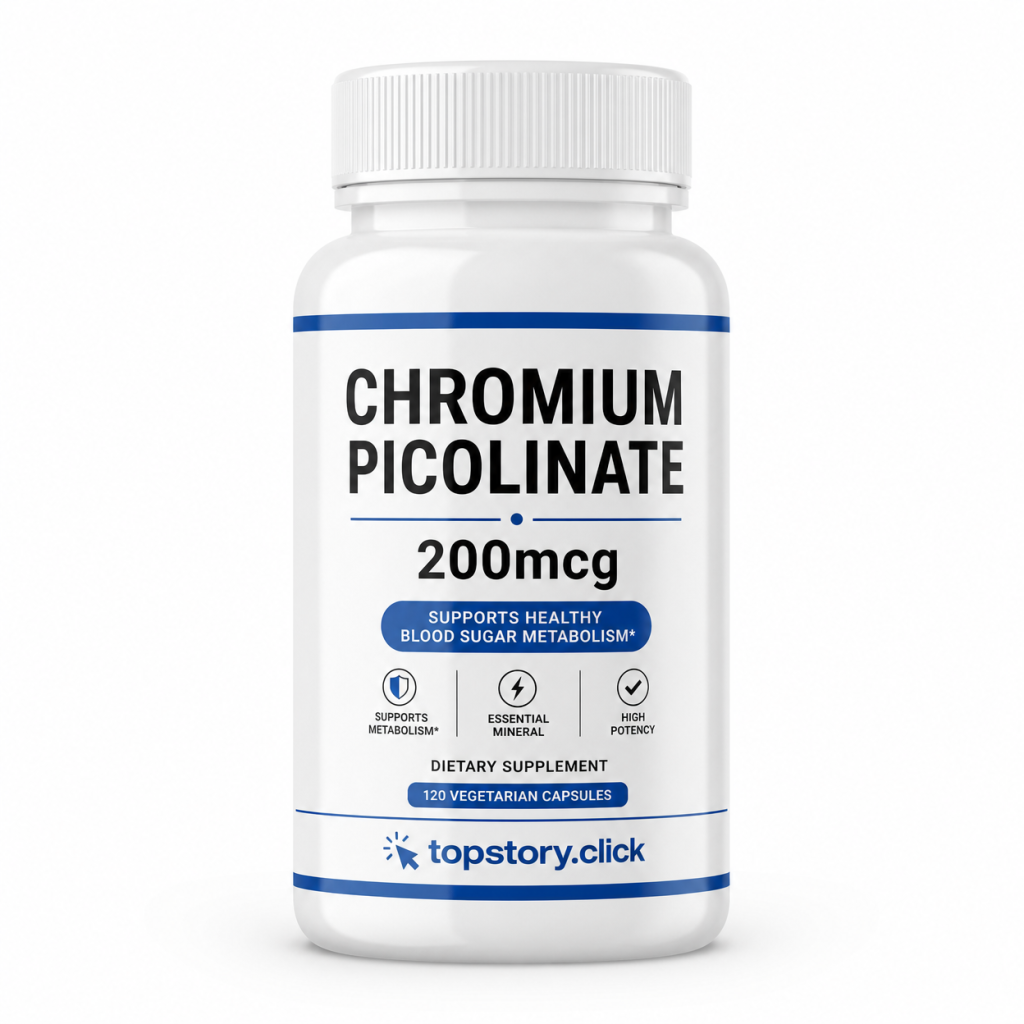
Chromium Picolinate 200mcg: Blood Sugar Balance and Metabolic Support
May
Introduction
Chromium is an essential trace mineral required in extremely small amounts, yet it plays a disproportionately important role in human metabolism. Its primary biological function is the enhancement of insulin activity, making it directly relevant to glucose regulation, energy production, fat metabolism, and appetite control.
Although chromium requirements are measured in micrograms, even slight deficiencies or suboptimal intake may influence how effectively the body responds to insulin — particularly in modern dietary environments high in refined carbohydrates and low in micronutrient density.
Chromium picolinate (200mcg) is the most widely studied supplemental form due to its superior absorption and biological activity compared to inorganic chromium salts.
Chromium and Insulin: The Core Mechanism
Chromium does not replace insulin. Instead, it enhances insulin signaling efficiency at the cellular level.
How It Works
When insulin binds to receptors on the cell surface, it triggers a signaling cascade that allows glucose to enter the cell. Chromium supports this process through a low-molecular-weight chromium-binding complex known as chromodulin.
This can be represented conceptually as:
Insulin signaling efficiency↑ ⇒ Glucose uptake↑\text{Insulin signaling efficiency} \uparrow \; \Rightarrow \; \text{Glucose uptake} \uparrow
In practical terms, adequate chromium status leads to:
- Improved cellular response to insulin
- Enhanced glucose uptake into muscle and liver cells
- Reduced circulating blood glucose levels
- Lower insulin demand after meals
When chromium status is low, insulin signaling becomes less efficient, contributing to insulin resistance over time.
Why Chromium Picolinate Is Preferred
Chromium exists in multiple supplemental forms, including:
- Chromium chloride
- Chromium nicotinate
- Chromium picolinate
Among these, chromium picolinate is considered the most bioavailable.
Why Picolinate Matters
Picolinic acid:
- Enhances mineral absorption in the gut
- Improves transport across cell membranes
- Increases tissue uptake of chromium
Compared to other forms, chromium picolinate produces more consistent increases in blood chromium levels and biological activity, which is why it dominates clinical research.
Blood Sugar Regulation and Diabetes Support
The most well-established application of chromium picolinate is its role in glucose metabolism and insulin resistance.
Type 2 Diabetes
Clinical studies and meta-analyses have shown that chromium supplementation can:
- Reduce fasting blood glucose
- Improve HbA1c (long-term glucose marker)
- Lower fasting insulin levels
These effects are most significant in individuals with existing metabolic dysfunction.
Prediabetes and Early Insulin Resistance
In earlier stages of metabolic decline, chromium may help:
- Improve insulin sensitivity
- Stabilize post-meal blood sugar spikes
- Reduce progression toward type 2 diabetes
While not a replacement for dietary or lifestyle intervention, it may act as a supportive metabolic modulator.
Appetite Regulation and Carbohydrate Cravings
Chromium picolinate has been studied for its effects on food cravings and appetite control, particularly carbohydrate cravings.
Proposed Mechanisms
Chromium may influence:
- Serotonin signaling pathways in the brain
- Reward and impulse control mechanisms
- Post-meal satiety signaling
Some clinical trials have shown reductions in:
- Sugar cravings
- Binge eating episodes
- Emotional eating behavior
This makes chromium particularly relevant in weight management contexts where cravings are a major barrier.
Body Composition and Fat Metabolism
Chromium does not directly burn fat, but it may influence how nutrients are partitioned in the body.
Metabolic Effects
By improving insulin sensitivity, chromium may:
- Promote better glucose utilization in muscle tissue
- Reduce excess glucose storage as fat
- Support lean mass retention during dieting
Improved insulin sensitivity ⇒ better nutrient partitioning (muscle vs fat storage)\text{Improved insulin sensitivity} \; \Rightarrow \; \text{better nutrient partitioning (muscle vs fat storage)}
Practical Outcomes
Studies suggest modest benefits in:
- Lean body mass preservation
- Small reductions in body fat percentage
- Improved metabolic efficiency in active individuals
However, effects are most pronounced when combined with diet and exercise.
Lipid Profile and Cardiovascular Health
Chromium picolinate may also influence blood lipid levels indirectly through improved glucose metabolism.
Observed effects in some studies include:
- Reduced triglycerides
- Lower total cholesterol
- Slight increases in HDL cholesterol
These changes are generally modest but may contribute to overall cardiovascular risk reduction in insulin-resistant individuals.
PCOS and Hormonal Metabolism
Polycystic Ovary Syndrome (PCOS) is strongly linked to insulin resistance, affecting a majority of diagnosed women.
Chromium’s Role in PCOS
Supplementation may support:
- Improved insulin sensitivity
- Reduced circulating insulin levels
- Decreased androgen (testosterone) levels
- Improved menstrual regularity in some cases
Because insulin directly influences ovarian hormone production, improving insulin function can have downstream hormonal benefits.
Neurological and Mood-Related Effects
Chromium has been investigated for its potential influence on:
- Mood regulation
- Reward behavior
- Atypical depression
Some studies suggest chromium picolinate may reduce:
- Emotional eating linked to mood disorders
- Carbohydrate-driven mood fluctuations
- Impulsive eating behaviors
These effects are thought to involve serotonin modulation in the central nervous system.
Deficiency Risk Factors
True chromium deficiency is difficult to define clinically, but suboptimal chromium status may be more common in modern populations.
Factors that may increase chromium loss include:
- High intake of refined carbohydrates and sugar
- Chronic stress
- Intense physical activity
- Diets low in whole grains and vegetables
Refined diets not only lack chromium but may also increase urinary chromium excretion.
Dosage and Evidence-Based Use
Recommended Intake
The estimated adequate intake for adults is:
25–35 μg/day25\text{–}35\,\mu g/day
Supplementation Range
Clinical studies commonly use:
- 200mcg/day (standard supplementation)
- 400–1000mcg/day (therapeutic contexts in research)
Safety Profile
Chromium picolinate is generally well tolerated. Concerns from early animal studies about potential DNA damage have not been confirmed in human research at standard doses.
At typical supplemental levels:
- No established upper intake limit exists
- Adverse effects are rare
- Long-term use in studies has shown good safety profiles
Who May Benefit Most
Chromium picolinate may be particularly useful for:
- Individuals with insulin resistance or prediabetes
- People with type 2 diabetes (as adjunct support)
- Those with strong carbohydrate cravings
- Individuals with difficulty managing appetite
- Women with PCOS
- People aiming to optimize body composition
Limitations and Realistic Expectations
Chromium is not a standalone solution for metabolic disorders. Its effects depend heavily on:
- Overall diet quality
- Physical activity level
- Baseline insulin sensitivity
It provides supportive metabolic enhancement, not pharmacological glucose control.
Conclusion
Chromium Picolinate 200mcg is a well-researched trace mineral supplement that supports one of the most important metabolic systems in the human body: insulin signaling. By enhancing glucose uptake efficiency and improving cellular responsiveness to insulin, chromium contributes to better blood sugar regulation, appetite control, and metabolic balance.
While its effects are generally modest compared to medical therapies, its safety profile and broad metabolic relevance make it a valuable adjunct for individuals seeking to optimize energy metabolism, body composition, and long-term metabolic health in a modern diet environment dominated by refined carbohydrates.
