Post
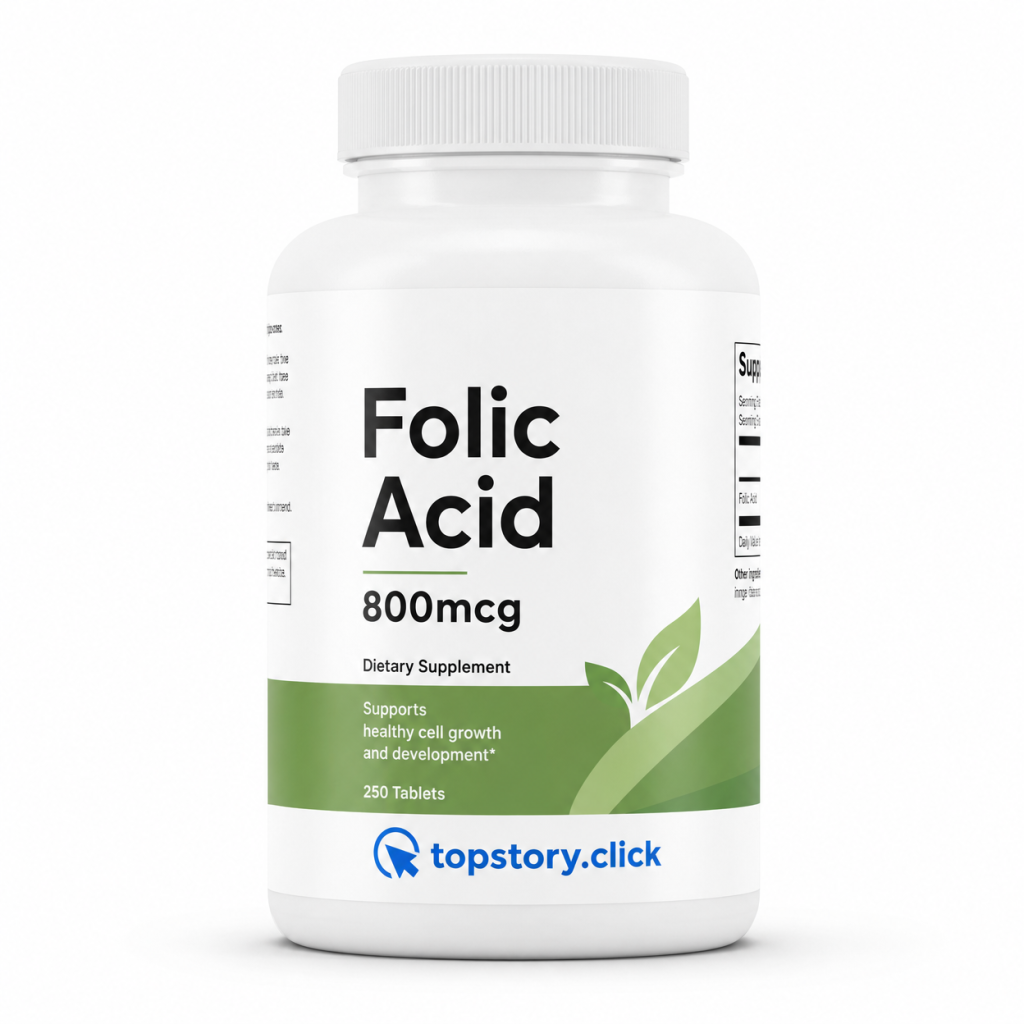
Folic Acid 800mcg: Essential for Cellular Health and Pregnancy
May
Introduction
Folic acid is the synthetic, stable form of Vitamin B9 (folate) and remains one of the most extensively studied vitamins in human nutrition. At a dosage of 800mcg, it provides a high but commonly used supplemental level that supports critical biological processes such as DNA synthesis, cell division, and methylation.
Unlike many nutrients that serve limited roles, folate is involved in the core machinery of life at the cellular level. Every rapidly dividing cell in the body depends on adequate folate availability, making it especially important during periods of growth, pregnancy, recovery, and high metabolic demand.
Although folate is found naturally in leafy greens, legumes, and certain fruits, dietary intake alone is often insufficient due to food processing, cooking losses, and inconsistent consumption patterns. For this reason, folic acid supplementation has become a cornerstone of preventive nutrition worldwide.
Folate Biology: A Deeper Look at One-Carbon Metabolism
Folate operates primarily through a biochemical system known as one-carbon metabolism, a network of reactions that transfers single carbon units for essential biological functions.
This system supports three major processes:
1. DNA Synthesis and Cellular Division
Folate is required for the production of purines and pyrimidines, the fundamental building blocks of DNA and RNA. Without folate:
- DNA replication becomes faulty
- Cell division slows or stops
- Rapidly dividing tissues are affected first
This is why folate is essential for:
- Fetal development
- Bone marrow activity
- Tissue repair and regeneration
Even mild deficiency can impair normal cellular turnover over time.
2. Methylation and Gene Regulation
Methylation is a biochemical “switching system” that controls how genes are expressed. Folate provides methyl groups that regulate:
- Gene expression patterns
- Neurotransmitter production
- Detoxification pathways
- Hormone metabolism
- Epigenetic programming
This means folate is not just a structural nutrient — it directly influences how the body’s genetic instructions are read and executed.
3. Homocysteine Recycling
Folate plays a critical role in converting homocysteine → methionine, in collaboration with:
- Vitamin B12
- Vitamin B6
Homocysteine is an amino acid that, when elevated, is associated with increased risk of:
- Atherosclerosis
- Stroke
- Blood clot formation
- Endothelial dysfunction
Proper folate intake helps maintain this pathway in balance, supporting cardiovascular integrity.
Folic Acid 800mcg in Pregnancy and Development
One of the most well-established roles of folic acid is its effect on early embryonic development.
Neural Tube Formation
The neural tube forms within the first 28 days after conception, often before pregnancy is detected. This structure later develops into the:
- Brain
- Spinal cord
If closure is incomplete, it can result in serious birth defects such as:
- Spina bifida
- Anencephaly
Why Timing Is Critical
Because the neural tube forms so early, folate status must already be sufficient before conception occurs. This is why global health guidelines recommend folic acid supplementation for all women of reproductive age.
Population-Level Impact
Countries that implemented mandatory folic acid fortification in grains have observed:
- Significant reduction in neural tube defects
- Improved maternal folate status
- Lower rates of folate-related pregnancy complications
Folic acid remains one of the most effective public health interventions in modern nutrition science.
Expanded Health Benefits of Folic Acid 800mcg
1. Pregnancy Outcomes Beyond Neural Tube Defects
Folic acid supports more than just early fetal neural development. Adequate intake is also associated with:
- Healthy placental formation
- Improved fetal growth patterns
- Reduced risk of low birth weight
- Lower incidence of premature delivery
- Reduced risk of certain congenital abnormalities
The placenta is highly metabolically active, requiring constant DNA synthesis and cell division — both dependent on folate availability.
2. Cardiovascular System Support
Folic acid contributes significantly to cardiovascular regulation through homocysteine metabolism.
Homocysteine as a Risk Marker
Elevated homocysteine is considered an independent cardiovascular risk factor due to its effects on:
- Blood vessel inflammation
- Oxidative stress
- Endothelial dysfunction
- Increased thrombosis risk
Synergistic Nutrient Network
Folate works in a tightly connected system with:
- Vitamin B6 (pyridoxine)
- Vitamin B12 (cobalamin)
Together, they maintain vascular health and support normal blood flow dynamics.
Long-term observational studies consistently show that individuals with higher folate intake tend to have better cardiovascular outcomes.
3. Brain Function, Neurochemistry, and Mental Health
Folate plays a central role in brain metabolism and neurotransmitter synthesis.
Neurotransmitter Production
Adequate folate supports the production of:
- Serotonin (mood regulation)
- Dopamine (motivation and reward)
- Norepinephrine (alertness and focus)
Cognitive Function
Low folate levels have been associated with:
- Slower cognitive processing
- Memory decline
- Reduced attention span
- Increased risk of depression
Depression and Treatment Response
Clinical research suggests that folate supplementation may:
- Improve response to antidepressant therapy in some individuals
- Support mood stability in folate-deficient populations
- Enhance overall cognitive resilience
Folate is increasingly recognized as a key nutrient in neuropsychiatric health.
4. Red Blood Cell Production and Oxygen Transport
Folate is essential for bone marrow function and red blood cell maturation.
Megaloblastic Anemia
When folate is deficient, red blood cell development becomes impaired, resulting in:
- Enlarged, immature red blood cells
- Reduced oxygen-carrying capacity
- Symptoms such as fatigue, weakness, and shortness of breath
This condition is known as megaloblastic anemia, which can overlap clinically with Vitamin B12 deficiency.
5. DNA Stability and Long-Term Disease Prevention
Folate contributes to maintaining genomic integrity by:
- Supporting accurate DNA replication
- Preventing DNA strand breaks
- Regulating methylation patterns that control gene expression
Cancer Research Perspective
Epidemiological studies suggest adequate folate intake may be associated with reduced risk of:
- Colorectal cancer
- Certain gastrointestinal cancers
- Possibly other epithelial cancers
However, folate’s role in cancer biology is complex — it may have different effects depending on timing, dosage, and existing cellular conditions.
Folic Acid vs. Methylfolate: Expanded Consideration
Folic Acid (Synthetic Form)
- Requires enzymatic conversion in the liver
- Highly stable and widely used in fortification
- Cost-effective and well-studied
L-Methylfolate (Active Form)
- Biologically active form used directly in the body
- Bypasses conversion steps
- Preferred for individuals with reduced MTHFR enzyme activity
MTHFR Genetic Variation
A significant portion of the population carries MTHFR polymorphisms that reduce conversion efficiency of folic acid into active folate. In such cases:
- Higher doses of folic acid may be less efficient
- L-methylfolate may provide more direct benefit
However, for most individuals, folic acid remains effective and well-utilized at recommended doses.
Who Benefits Most from 800mcg Folic Acid?
Folic acid supplementation is particularly relevant for:
- Women planning pregnancy or in early pregnancy
- Individuals with elevated homocysteine levels
- People with low dietary intake of folate-rich foods
- Patients with malabsorption disorders (e.g., celiac disease)
- Individuals taking medications that interfere with folate metabolism
- Heavy alcohol consumers (due to reduced absorption and increased depletion)
These populations often have increased metabolic demand or reduced folate availability.
Safety Profile and Nutritional Balance
Folic acid is generally very safe when used appropriately.
Upper Intake Considerations
- Adult tolerable upper limit: 1,000mcg/day
- 800mcg remains within safe supplemental range
Important Clinical Consideration
Excess folic acid can mask Vitamin B12 deficiency, particularly by correcting anemia while allowing neurological damage to progress unnoticed. Therefore:
- Folate supplementation should be balanced with adequate B12 intake
- Combined B-vitamin status is important for long-term safety
Absorption and Usage in the Body
Folic acid is absorbed efficiently in the small intestine and transported to the liver, where it is converted into active forms used throughout the body.
Absorption efficiency can be influenced by:
- Digestive health
- Genetic factors (MTHFR)
- Alcohol intake
- Medication use
Regular intake helps maintain stable folate pools in the body due to limited storage capacity.
Practical Use and Supplement Integration
Folic acid is often included in:
- Prenatal vitamins
- B-complex formulas
- Multivitamin supplements
For optimal synergy, it is commonly combined with:
- Vitamin B12 (for methylation balance)
- Vitamin B6 (for homocysteine metabolism)
- Iron (in pregnancy formulations)
Conclusion
Folic Acid 800mcg is a foundational nutrient that supports some of the most essential processes in human biology, including DNA synthesis, red blood cell formation, brain function, and cardiovascular regulation.
Its role in preventing neural tube defects alone makes it one of the most important nutrients in prenatal health, while its broader metabolic functions extend to long-term heart, brain, and cellular protection.
When used appropriately and in balance with other B vitamins, folic acid represents a safe, effective, and highly valuable supplement for supporting both short-term physiological needs and long-term health outcomes.
