Post
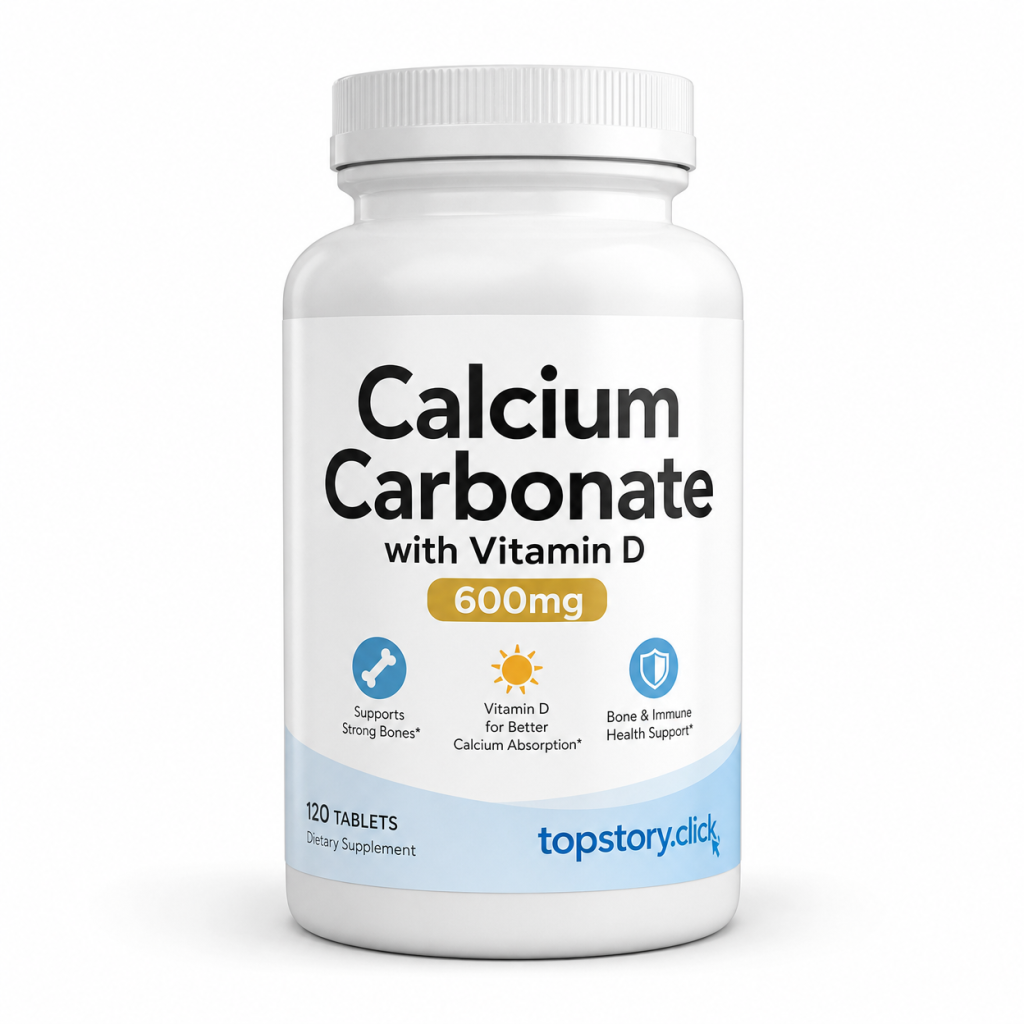
Calcium Carbonate with Vitamin D 600mg: Building Strong Bones for Life
May
Introduction
Calcium is the most abundant mineral in the human body, accounting for roughly 1–2% of total body weight. About 99% of calcium is stored in bones and teeth, where it provides structural integrity and acts as a long-term mineral reservoir. The remaining 1% circulates in blood and soft tissues, where it plays essential roles in muscle contraction, nerve signaling, hormone release, and blood clotting.
Because calcium is so biologically important, the body tightly regulates its levels through a complex hormonal system involving parathyroid hormone (PTH), calcitonin, and Vitamin D. Any disruption in this balance can significantly impact skeletal health, cardiovascular function, and neuromuscular stability.
Calcium Carbonate with Vitamin D 600mg combines two synergistic nutrients that are fundamental to maintaining bone density and overall mineral balance.
Calcium Carbonate: Structure and Absorption
Calcium supplements are most commonly found in two main forms:
- Calcium carbonate
- Calcium citrate
Among these, calcium carbonate is the most concentrated form, containing approximately 40% elemental calcium by weight.
Key Advantages
- High elemental calcium content per tablet
- Cost-effective supplementation
- Widely available and well-researched
Absorption Characteristics
Calcium carbonate requires stomach acid (hydrochloric acid) for optimal absorption. For this reason, it is best taken with meals, when gastric acid secretion is naturally higher.
In individuals with reduced stomach acid (such as older adults or those taking acid-reducing medications), calcium citrate may sometimes be preferred. However, for individuals with normal digestion, calcium carbonate remains highly efficient.
The Essential Role of Vitamin D in Calcium Metabolism
Vitamin D is not simply an accessory nutrient—it is a biological regulator of calcium homeostasis.
Without adequate Vitamin D:
- Only ~10–15% of dietary calcium is absorbed
With sufficient Vitamin D: - Absorption increases to ~30–40% or more
Mechanism of Action
Vitamin D enhances calcium utilization by:
- Increasing expression of calcium transport proteins (calbindin)
- Enhancing calcium channel activity in intestinal cells
- Regulating gene expression related to bone remodeling
- Supporting reabsorption of calcium in the kidneys
In effect, Vitamin D determines how efficiently dietary calcium is used by the body.
Bone Health and Structural Integrity
Bone Remodeling Process
Bone is a living tissue that constantly undergoes remodeling through two opposing processes:
- Osteoblast activity → bone formation
- Osteoclast activity → bone breakdown
As people age—particularly after age 30—bone resorption gradually exceeds formation, leading to progressive loss of bone density.
Role of Calcium + Vitamin D
Together, they:
- Maintain bone mineral density (BMD)
- Reduce risk of fractures
- Support skeletal strength and resilience
- Help prevent osteoporosis
Adequate intake during:
- Childhood
- Adolescence
- Postmenopausal years
is especially important for long-term skeletal health.
Muscle Function and Neuromuscular Activity
Calcium is essential for muscle contraction and relaxation cycles.
When a nerve signal reaches a muscle fiber:
- Calcium is released inside the cell
- It enables interaction between actin and myosin proteins
- This produces muscle contraction
Once contraction is complete, calcium is reabsorbed, allowing muscle relaxation.
Clinical Relevance
Low calcium levels may contribute to:
- Muscle cramps
- Weak contractions
- Neuromuscular irritability
- Fatigue
Calcium also plays a role in cardiac muscle contraction, making it critical for heart rhythm stability.
Cardiovascular Function and Blood Clotting
Calcium is essential for:
- Normal heart electrical conduction
- Vascular contraction and relaxation
- Blood coagulation (clotting cascade activation)
Severe calcium imbalance can result in:
- Cardiac arrhythmias
- Muscle spasms
- Neuromuscular dysfunction
At normal physiological levels, calcium contributes to stable cardiovascular function.
Calcium and Bone-Related Disease Prevention
Osteoporosis Prevention
One of the primary uses of calcium supplementation is reducing the risk of osteoporosis, especially in:
- Postmenopausal women
- Older adults
- Individuals with low dietary calcium intake
Bone loss accelerates when calcium intake is insufficient over time.
Fracture Risk Reduction
Maintaining adequate calcium intake helps:
- Improve bone density
- Reduce fracture risk
- Support skeletal resilience under mechanical stress
Calcium and Colon Health
Research suggests that calcium may play a protective role in colorectal health.
Proposed Mechanisms
- Binds to bile acids in the colon
- Reduces irritation of intestinal lining
- Decreases exposure to potentially harmful compounds
Some studies associate higher calcium intake with a reduced risk of colorectal cancer, although findings vary depending on diet and lifestyle factors.
Calcium and Metabolic Effects
Calcium may also influence metabolic processes, including:
- Fat metabolism regulation
- Hormonal signaling involving calcitriol
- Parathyroid hormone modulation
Some research suggests that adequate calcium intake may support healthy body composition, though it is not a weight-loss agent on its own.
PMS Symptom Support
Clinical studies have shown that calcium supplementation may help reduce symptoms of premenstrual syndrome (PMS), including:
- Mood fluctuations
- Bloating
- Food cravings
- Physical discomfort
This is likely related to calcium’s role in neuromuscular signaling and hormonal regulation.
Who May Benefit from Calcium Supplementation?
Calcium supplementation is often beneficial for:
- Women over 50 (postmenopausal bone loss risk)
- Men over 70
- Individuals with low dairy or calcium intake
- Vegans or plant-based eaters
- People with osteoporosis or osteopenia
- Individuals with malabsorption disorders
- Those with limited sun exposure (due to Vitamin D interplay)
Dosage, Absorption Limits, and Safety
Absorption Limit Per Dose
The body typically absorbs about 500mg of calcium per dose, meaning:
- Larger doses should be split throughout the day for optimal absorption
Total Daily Intake Guidelines
- Recommended total intake: varies by age (typically 1,000–1,200mg/day)
- Upper limit: ~2,000–2,500mg/day (diet + supplements combined)
Excessive long-term intake may be associated with:
- Kidney stone risk in susceptible individuals
- Possible vascular calcification (still debated in research)
Best Practices for Use
- Take with meals for better absorption
- Split doses if taking higher amounts
- Ensure adequate Vitamin D status
- Maintain balanced intake with magnesium and Vitamin K2 for optimal bone metabolism
Calcium, Vitamin D, and Nutrient Synergy
Calcium does not function in isolation. It works within a network of nutrients:
- Vitamin D → increases absorption
- Magnesium → regulates calcium transport and activation of Vitamin D
- Vitamin K2 → directs calcium into bones rather than soft tissues
This nutritional synergy is essential for proper calcium utilization in the body.
Conclusion
Calcium Carbonate with Vitamin D 600mg provides two foundational nutrients required for skeletal strength, muscle function, and overall physiological stability.
Calcium supplies the structural material for bones and teeth, while Vitamin D ensures efficient absorption and utilization. Together, they form a scientifically supported combination for maintaining bone density, preventing deficiency-related complications, and supporting long-term musculoskeletal health.
When used appropriately and combined with a balanced diet and complementary nutrients such as magnesium and Vitamin K2, this supplement serves as a reliable and cost-effective approach to supporting lifelong bone and metabolic health.
