Post
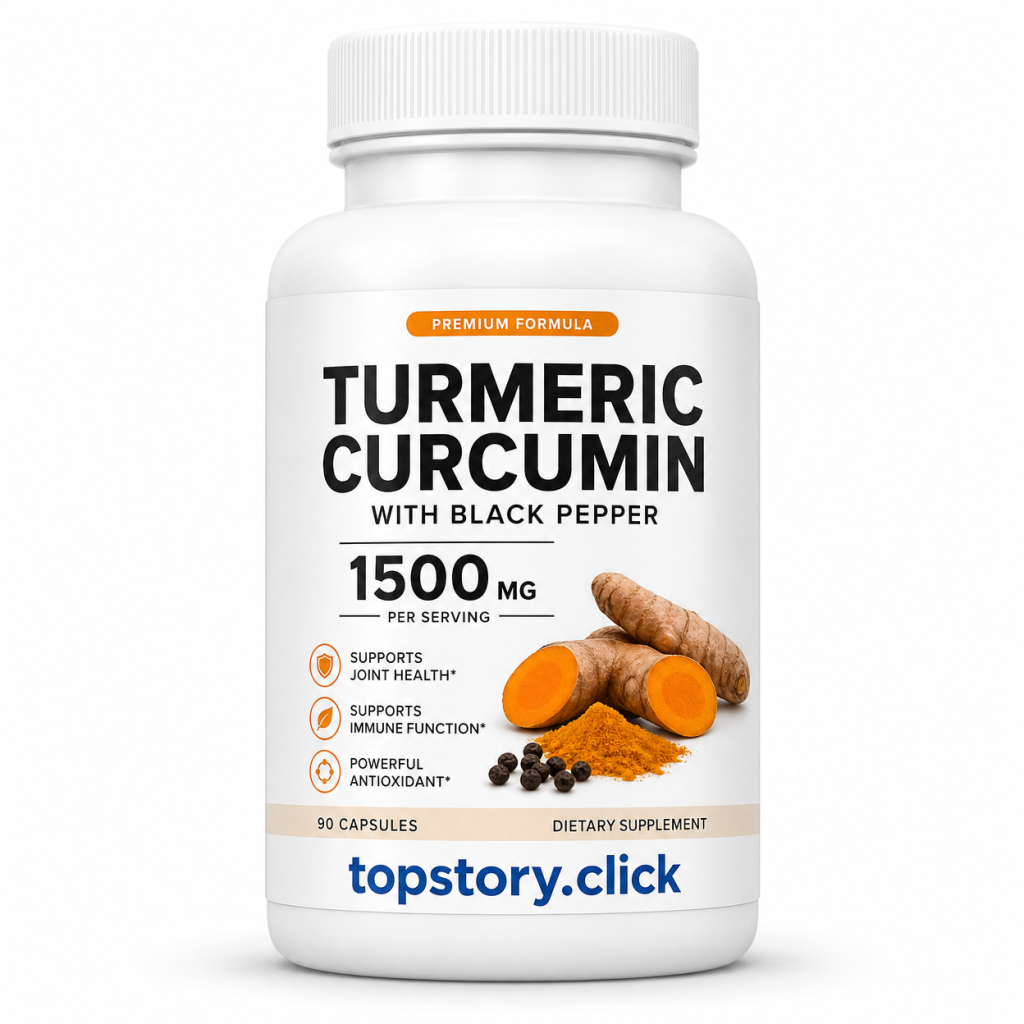
Turmeric Curcumin with Black Pepper 1500mg: Nature’s Most Powerful Anti-Inflammatory
May
Introduction
Turmeric has been a cornerstone of Ayurvedic and traditional Chinese medicine for more than 4,000 years, valued not only as a culinary spice but also as a therapeutic agent for a wide range of inflammatory and degenerative conditions. The bright golden color of turmeric comes from a group of polyphenolic compounds known as curcuminoids, of which curcumin is the most biologically active and extensively studied.
Modern scientific research has transformed turmeric from a traditional remedy into one of the most well-documented natural anti-inflammatory compounds in the world. Curcumin has been investigated in thousands of preclinical and clinical studies for its effects on inflammation, oxidative stress, metabolic regulation, neuroprotection, and chronic disease prevention.
However, curcumin on its own has a major limitation: extremely poor bioavailability. The 1500mg formulation combined with black pepper extract (piperine) is designed specifically to overcome this limitation, allowing curcumin to reach therapeutically relevant concentrations in the bloodstream and tissues.
The Bioavailability Challenge — and the Role of Piperine
Curcumin is highly lipophilic (fat-soluble) and poorly soluble in water, which makes absorption through the gastrointestinal tract inefficient. Even when large oral doses are consumed, most curcumin is rapidly metabolized in the intestinal wall and liver through processes such as glucuronidation and sulfation, converting it into inactive metabolites that are quickly excreted.
This means that without enhancement strategies, only a very small fraction of ingested curcumin enters systemic circulation.
Piperine, a bioactive alkaloid extracted from black pepper (Piper nigrum), is one of the most effective natural bioavailability enhancers known. It works through multiple mechanisms:
- Inhibition of hepatic and intestinal glucuronidation enzymes
- Suppression of P-glycoprotein drug efflux transporters
- Increased intestinal permeability for lipophilic compounds
- Slowing gastrointestinal transit, allowing longer absorption time
A landmark pharmacokinetic study published in Planta Medica demonstrated that adding piperine increased curcumin bioavailability by up to 2,000%. This dramatic enhancement is what allows relatively moderate doses like 1500mg to produce measurable systemic effects.
Molecular Mechanisms of Curcumin
Curcumin’s therapeutic value lies in its ability to modulate multiple molecular targets simultaneously. Unlike single-target pharmaceutical drugs, curcumin acts as a pleiotropic agent, influencing several signaling pathways involved in inflammation, oxidative stress, and cellular survival.
NF-κB Inhibition
NF-κB is a master transcription factor that regulates the expression of numerous pro-inflammatory genes. These include cytokines, chemokines, adhesion molecules, and enzymes involved in inflammation. Curcumin inhibits activation of NF-κB, effectively reducing the upstream signaling that drives chronic inflammation.
COX and LOX Enzyme Modulation
Curcumin inhibits cyclooxygenase-2 (COX-2) and lipoxygenase (LOX), enzymes responsible for the production of pro-inflammatory prostaglandins and leukotrienes. These are the same pathways targeted by non-steroidal anti-inflammatory drugs (NSAIDs), but without the associated gastrointestinal toxicity.
Cytokine Regulation
Curcumin downregulates pro-inflammatory cytokines such as TNF-α, IL-1β, and IL-6. These cytokines are elevated in a wide range of chronic diseases including arthritis, cardiovascular disease, diabetes, and neurodegenerative disorders.
Nrf2 Activation
Curcumin activates Nrf2 (nuclear factor erythroid 2–related factor 2), a transcription factor that regulates the body’s internal antioxidant defense system. This leads to increased production of glutathione, superoxide dismutase (SOD), and catalase — the body’s primary endogenous antioxidants.
This dual action — suppressing inflammation while enhancing antioxidant defense — is one of curcumin’s most unique biological advantages.
Key Health Benefits of Turmeric Curcumin 1500mg with Piperine
Joint Health and Arthritis
Curcumin is one of the most extensively studied natural interventions for osteoarthritis and rheumatoid arthritis. Clinical trials consistently show that curcumin supplementation reduces joint pain, stiffness, and functional impairment.
In multiple randomized controlled trials, curcumin has demonstrated efficacy comparable to ibuprofen and diclofenac in reducing osteoarthritis symptoms, but with significantly fewer gastrointestinal side effects. It works by reducing synovial inflammation, inhibiting cartilage-degrading enzymes such as matrix metalloproteinases (MMPs), and improving joint mobility.
Long-term use may also help slow structural progression of joint degeneration by reducing chronic inflammatory signaling in cartilage tissue.
Cardiovascular Health
Curcumin improves several key markers of cardiovascular health. One of its most important effects is enhancement of endothelial function — the ability of blood vessels to dilate and respond to physiological demands.
Clinical studies show that curcumin improves flow-mediated dilation, reduces arterial stiffness, and lowers systemic inflammation markers such as C-reactive protein (CRP). It also inhibits oxidation of LDL cholesterol, a critical early step in atherosclerosis formation.
Interestingly, some research has shown curcumin to be as effective as moderate aerobic exercise in improving endothelial function in specific populations.
Brain Health and Neuroprotection
Curcumin crosses the blood-brain barrier, especially in enhanced formulations. Once in the brain, it exerts neuroprotective effects through multiple pathways:
- Reduction of amyloid-beta plaque formation
- Inhibition of tau protein aggregation
- Reduction of microglial activation (neuroinflammation)
- Increase in brain-derived neurotrophic factor (BDNF)
BDNF plays a key role in neuroplasticity, learning, and memory formation. Low BDNF levels are associated with depression and neurodegenerative diseases.
Epidemiological observations showing lower rates of Alzheimer’s disease in populations with high dietary turmeric intake have further fueled interest in curcumin as a long-term cognitive support compound.
Mood and Depression Support
Curcumin has demonstrated clinically meaningful antidepressant effects in several controlled trials. Its mechanism is believed to involve both anti-inflammatory and neurotransmitter-modulating effects.
It increases serotonin and dopamine availability in the brain, reduces neuroinflammation (which is increasingly recognized as a major contributor to depression), and enhances BDNF expression.
Some studies suggest that curcumin may enhance the effectiveness of conventional antidepressants when used as an adjunct therapy.
Digestive and Gut Health
Curcumin has long been used traditionally for gastrointestinal disorders. Modern research supports its use in conditions such as irritable bowel syndrome (IBS), inflammatory bowel disease (IBD), and functional dyspepsia.
It helps reduce intestinal permeability, modulates gut microbiota composition, and suppresses Helicobacter pylori growth. Its anti-inflammatory effects extend to the intestinal lining, where it reduces mucosal inflammation and supports epithelial integrity.
Metabolic and Cancer-Related Research
Curcumin has shown promising effects on insulin sensitivity and glucose metabolism. Clinical studies in prediabetic individuals indicate that curcumin supplementation may significantly reduce progression to type 2 diabetes.
In oncology research, curcumin has demonstrated the ability to:
- Induce apoptosis (programmed cancer cell death)
- Inhibit angiogenesis (blood vessel formation in tumors)
- Suppress metastasis-related signaling pathways
While these findings are primarily preclinical, they highlight curcumin’s broad biological potential in cancer prevention research.
Dosage and Safety
A 1500mg curcumin formulation standardized to high curcuminoid content with piperine falls within the commonly studied therapeutic range used in clinical trials.
Curcumin is generally regarded as safe, even at relatively high doses. The most commonly reported side effects are mild gastrointestinal discomfort, which is usually dose-dependent and transient.
Because curcumin can inhibit platelet aggregation, caution is recommended for individuals taking anticoagulant or antiplatelet medications, or prior to surgical procedures.
Conclusion
Turmeric Curcumin with Black Pepper 1500mg represents one of the most scientifically validated natural anti-inflammatory supplements available today. Its ability to simultaneously regulate inflammation, oxidative stress, metabolic balance, and neurological health places it among the most versatile nutraceuticals in modern supplementation.
With piperine significantly enhancing absorption, curcumin becomes not just a traditional herbal remedy, but a clinically relevant compound with measurable effects on joint health, cardiovascular function, brain performance, mood regulation, and metabolic wellness.
In a modern environment characterized by chronic low-grade inflammation, curcumin offers a broad-spectrum biological counterbalance supported by both ancient tradition and contemporary science.
